
Discover internationally oriented degree programmes, a rich European student experience, and opportunities to build your future in Hungary. MG Education Consultancy supports students in exploring suitable Hungarian universities, selecting programmes, preparing applications, and understanding the student visa process.


Hungary is a European country known for its historic universities, cultural heritage, and international higher education programmes. Its capital, Budapest, is a major student destination, while cities such as Debrecen, Szeged, Pécs, and Győr also offer university study opportunities.
For international students, Hungary can be worth considering for the following reasons:
International study environment: Several universities offer degree programmes taught in English.
A range of academic disciplines: Options include business, management, economics, engineering, information technology, medicine, health sciences, agriculture, and social sciences.
European cultural experience: Students can experience Hungarian culture and explore the wider European region, subject to applicable travel and visa rules.
Different university environments: Students can compare the metropolitan lifestyle of Budapest with university cities such as Debrecen and Szeged.
Scholarship possibilities: Eligible applicants may investigate government-funded and university-specific scholarship programmes.
Academic progression: Students can choose from foundation or preparatory programmes where available, bachelor’s degrees, master’s degrees, and doctoral studies.
Important: Programme availability, admission standards, tuition fees, scholarships, and visa decisions vary by institution, course, and individual circumstances. Admission to a university does not automatically guarantee a student visa.
Hungarian universities for international students
Hungary has a broad range of higher education institutions. Below is a selection of universities to consider when building your study-abroad options.
1. International Business School (IBS)
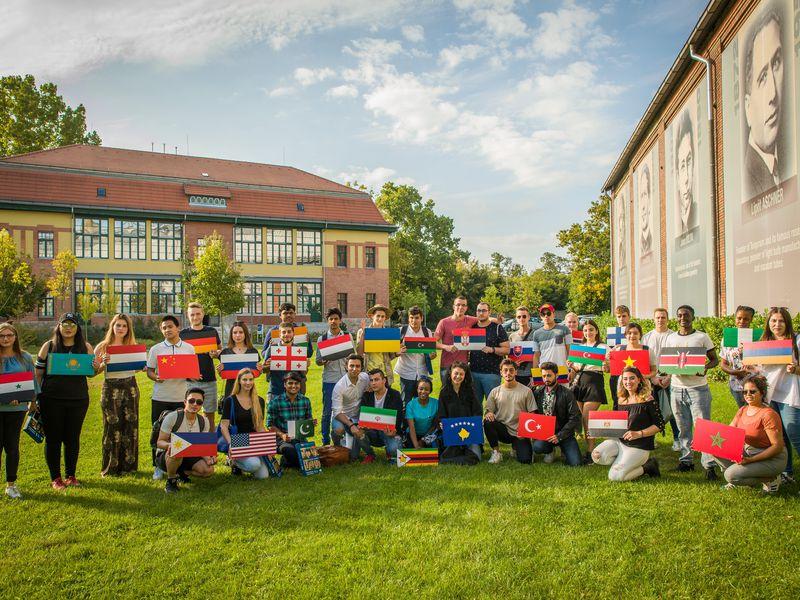
Location: Budapest
IBS is an option for students interested in business-focused education and English-taught programmes. Its published offerings include undergraduate and postgraduate business programmes, foundation studies, and doctoral opportunities. Some degrees are offered in cooperation with international partner institutions.
Popular subject areas
Business Management
Corporate Finance and Marketing
Human Resource Management and Business Psychology
International Management and Business Data Analytics
Official website: ibs-b.hu
2. University of Debrecen
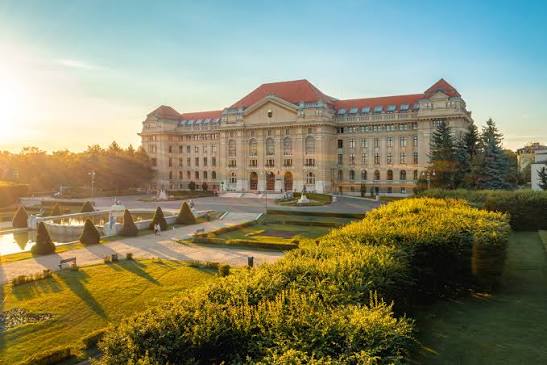
Location: Debrecen
The University of Debrecen offers English-taught programmes across multiple academic disciplines and study levels. Students can explore preparatory courses, bachelor’s degrees, master’s degrees, doctoral programmes, and certain one-tier professional degrees.
Medicine and health sciences
Engineering and Computer Science and IT
Business and Economics and Agriculture and Food Science
Natural Sciences
Official website: edu.unideb.hu
3. Corvinus University of Budapest
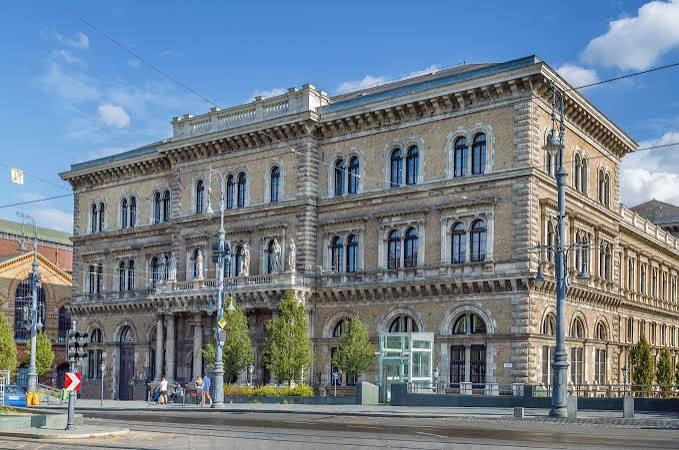
Location: Budapest
Corvinus is a strong option to investigate for students whose academic goals centre on business, economics, management, and social sciences. International applicants can explore self-funded admission and the scholarship routes listed by the university.
Popular subject areas
Business and Management and Economics
Finance and International Relations
Communication and Social Sciences
Official website: uni-corvinus.hu
Hungarian universities offer programmes across several study levels. The actual options depend on the institution, academic background, and language requirements.
Foundation and preparatory programmes
Suitable for eligible students who need additional academic preparation or English-language development before progressing to a degree. Some programmes have specific progression requirements, and completion does not automatically guarantee admission to every degree.
Bachelor's degree programmes
Designed for students who have completed the required secondary education. Depending on the course, admission may involve academic subject requirements, an interview, an entrance examination, or proof of English proficiency.
Master's degree programmes
Intended for graduates who meet the academic and subject-specific entry criteria. Universities may require a relevant bachelor’s degree, transcripts, proof of English proficiency, a CV, a motivation letter, or an interview.
PhD and doctoral programmes
Designed for eligible applicants seeking advanced research qualifications. Requirements may include a relevant master’s degree, a research proposal, supervisor approval, and an interview.
Popular courses to explore
These course categories can help prospective students narrow their choices before reviewing specific university programmes.
Study area | Examples of programmes |
|---|---|
Business and Management | Business Administration, International Business, Management |
Accounting and Finance | Finance, Accounting, Corporate Finance |
Marketing | Marketing, Digital Marketing, Commerce |
Information Technology | Computer Science, Software Engineering, Data Analytics |
Engineering | Mechanical, Civil, Electrical, Environmental Engineering |
Medicine and Health | Medicine, Dentistry, Pharmacy, Public Health |
Economics | Economics, International Economics, Applied Economics |
Hospitality and Tourism | Tourism Management, Hospitality Management |
Social Sciences | International Relations, Psychology, Communication |
Agriculture and Environment | Agricultural Science, Food Science, Environmental Studies |
Not every programme is available at every institution or taught in English. For medicine, dentistry, pharmacy, and other regulated professional fields, students should check professional recognition and registration requirements in their intended country of practice.

How MG Education Consultancy helps students
Step 1 — Initial consultation
Understand the student’s academic background, preferred subject, future goals, budget, and intended intake.
Step 2 — University and course selection
Identify suitable universities and programmes based on entry requirements, tuition fees, course content, and availability.
Step 3 — Application preparation
Help organise academic documents, application information, personal statements, and any additional materials requested by the institution.
Step 4 — Application follow-up
Assist with tracking application progress and communicating with the university about outstanding requirements, subject to the agreed service scope.
Step 5 — Visa preparation guidance
Help the student organise supporting documents, understand the published requirements, and prepare for the relevant application procedure.
Step 6 — Pre-departure preparation
Provide guidance on accommodation planning, travel preparation, budgeting, and university enrolment arrangements where included in the service.
Table of Contents
Toggle